How to Timeneye
Timeneye 101: How To Set Up Your Workspace
Getting started with Timeneye: all you need to know about setting up your Timeneye workspace, so you can get straght to tracking your time.
If your team lives in Azure DevOps, you probably already know the Timeneye Azure DevOps integration thanks to the Timeneye Browser widget.
Now, we take a leap forward thanks to a new major update to our integration: Timeneye now connects natively with Azure DevOps.
Below, we explain the changes for you and your team and how to use the integration for a better, seamless time-tracking experience.
The Timeneye + Azure DevOps integration is built around one core idea: your team should be able to track time without leaving the tools they already use. Just like our other native integrations (Microsoft Planner, for example), our goal is to make time tracking seamless, automated, and without unnecessary tab switching. Whether you prefer to stay inside Azure DevOps or manage everything from within Timeneye, the integration works the way you do.
There are two main ways to use it:
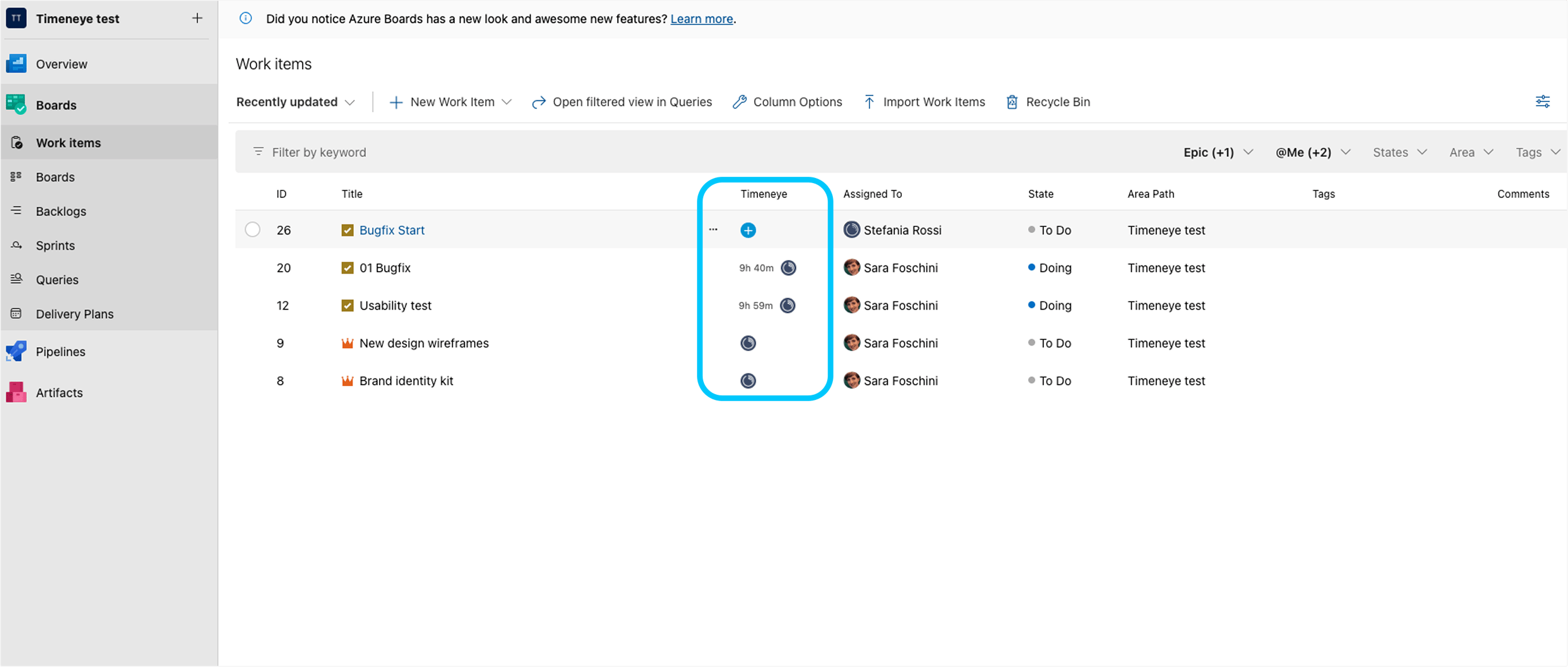
Track time directly inside Azure DevOps. With the integration, you can log time entries right from your Azure DevOps work items: no tab switching, no copy-pasting task names, no guesswork. If you're working on a user story, bug, or sprint task, time tracking is right there with it.
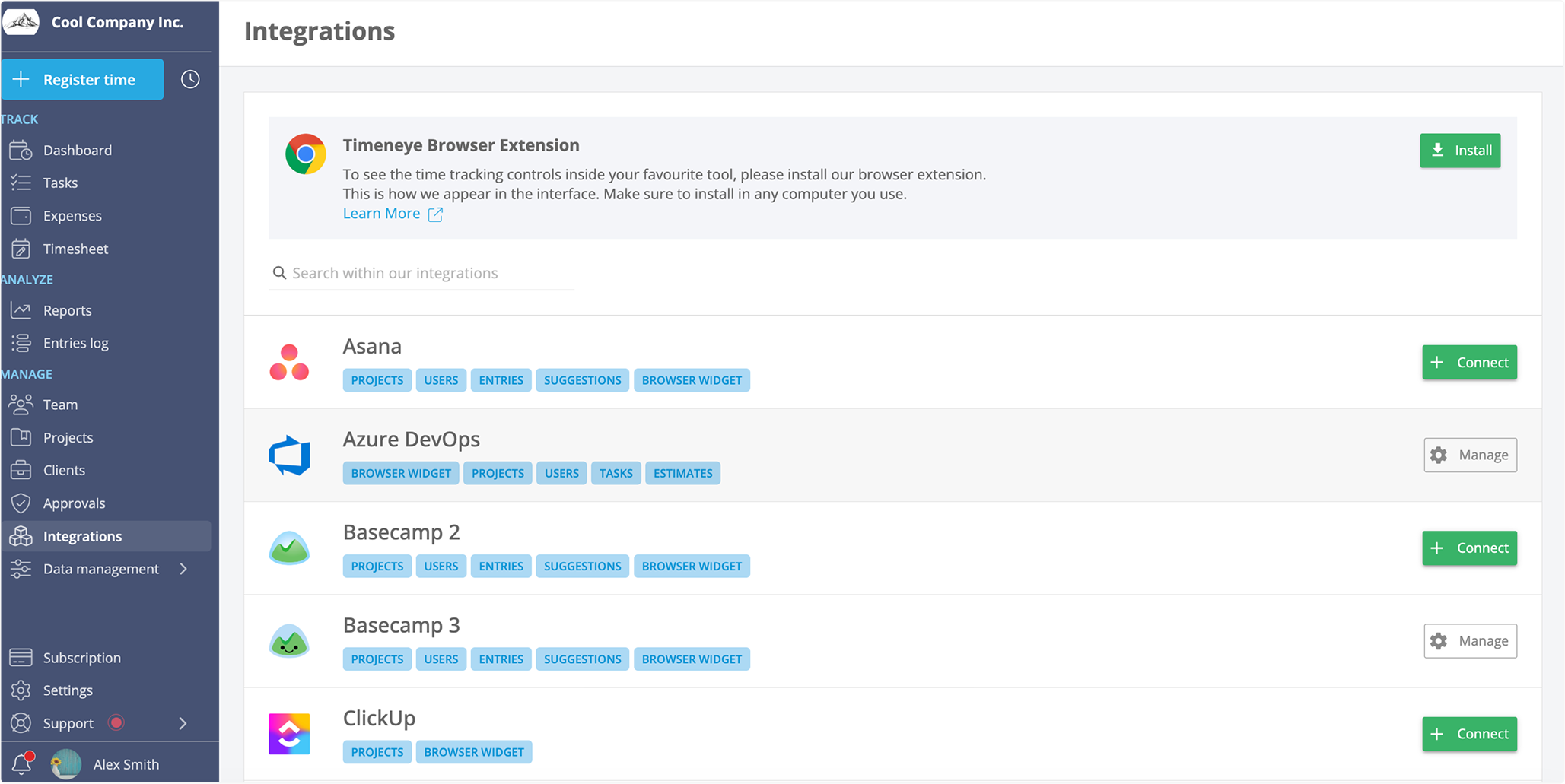
NEW! Import Azure DevOps projects/items into Timeneye. Prefer to keep time tracking centralized in Timeneye? You can pull your Azure DevOps projects directly in, map them to the right phases and tags, and track time from there, with all the tracking and reporting power Timeneye already gives you.
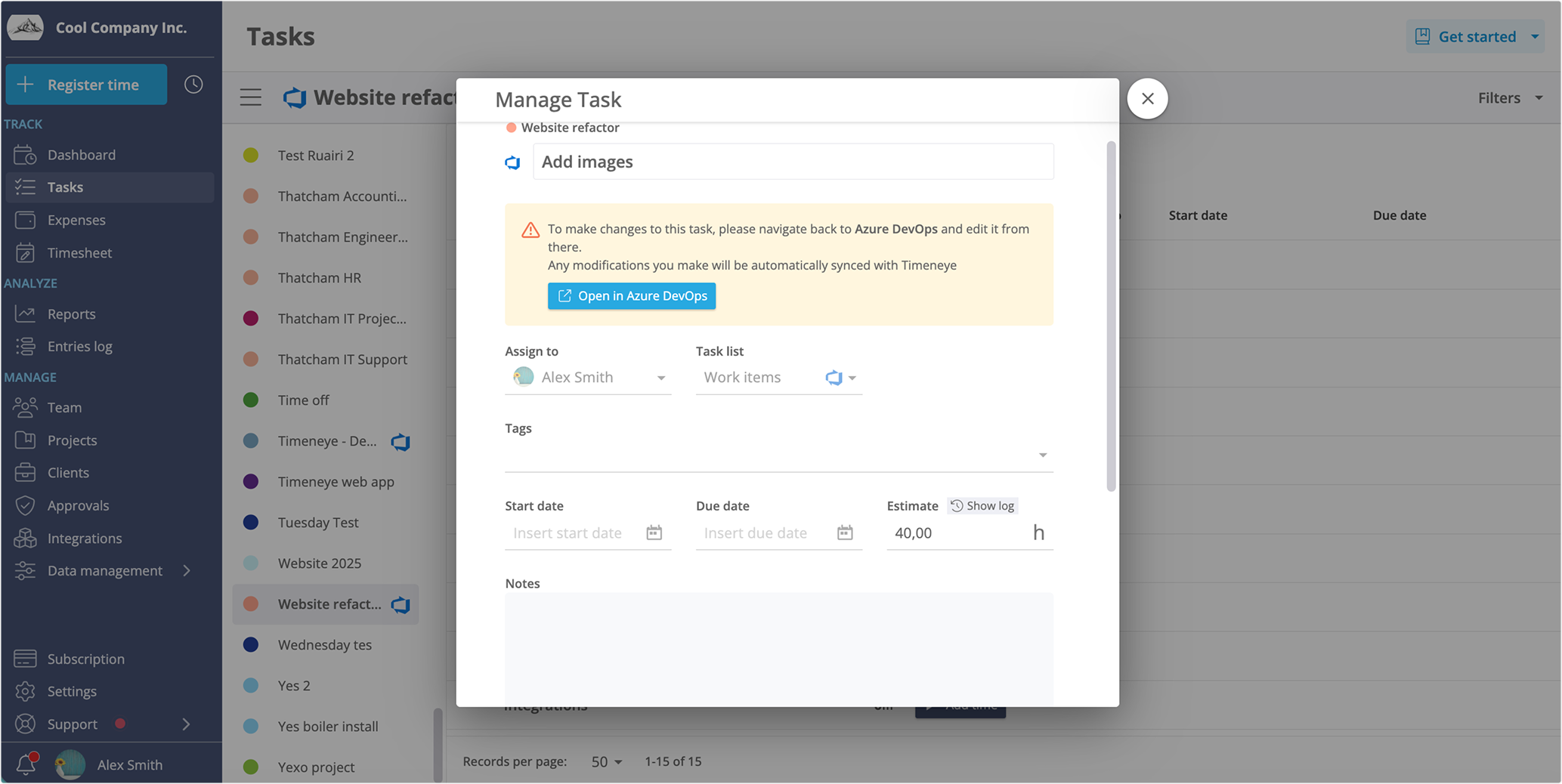
Lastly, users will be able to see their Effort inside the Timeneye Estimated time field in the Timeneye task, because the integration will import that field too.
It's up to the user to decide whether they'd prefer to track inside Azure DevOps...
Or in the Timeneye Tasks section:
The integration just got radically better.
The most immediate change is a reduction in context switching. Your developers, project managers, and team leads won't need to maintain two different places. The integration brings everything together.
Time entries are also more accurate when they're logged in context. When someone tracks time directly on the work item they're actually working on, the categorization (project, phase, tags) is quicker and more accurate. That means less manual cleanup, fewer "I think this was about 2 hours?" estimates, and data you can actually trust.
Finally, accurate, complete time data means your reports reflect what actually happened. Billing and invoicing become easier to create and justify. Project timelines become easier to analyze and improve.
Owners can connect the integration natively inside their Timeneye Integration section. Once connected, they’ll be able to select which project to import. Then, Azure DevOps items will live in the Tasks section.
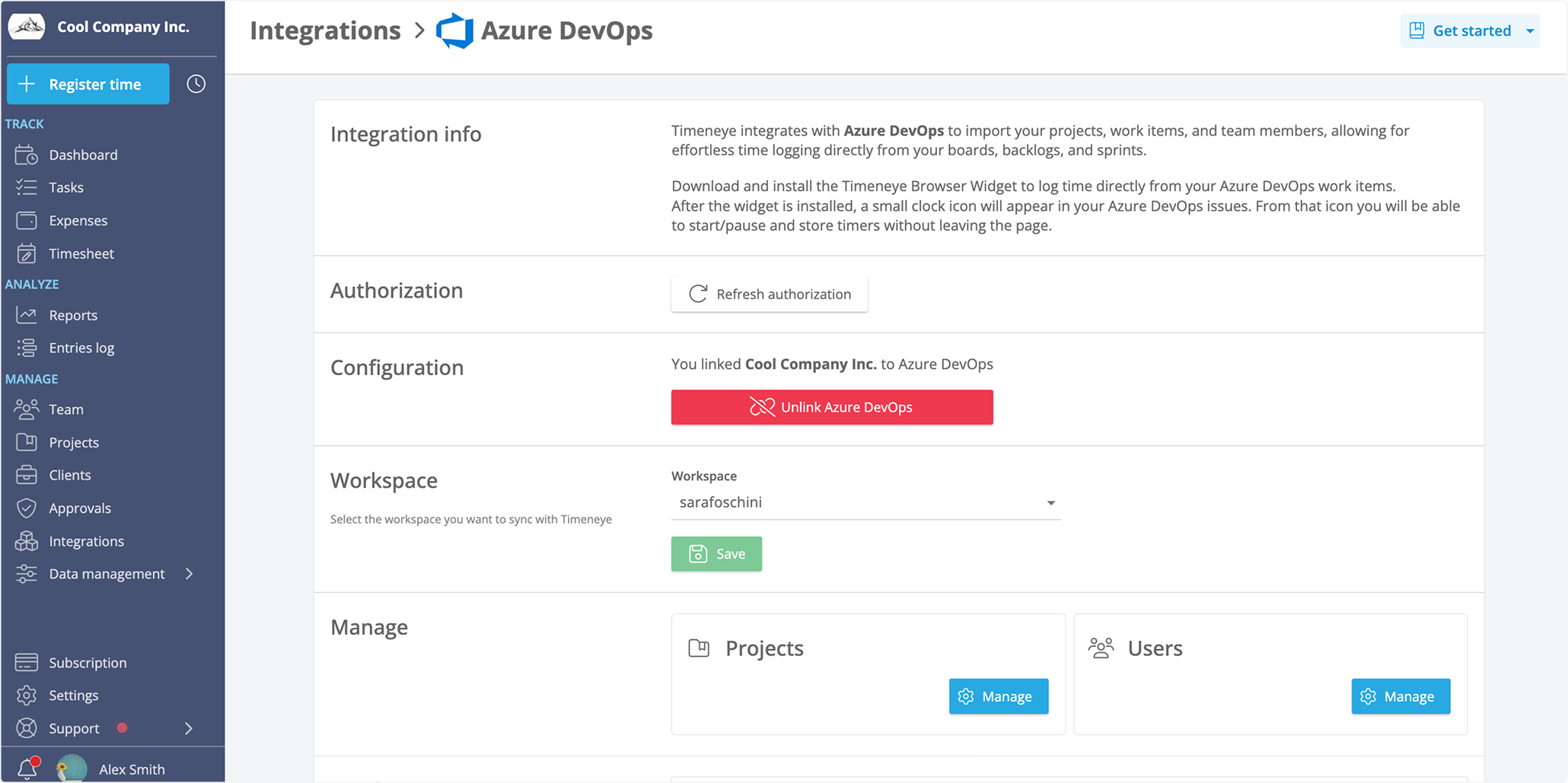
The Azure DevOps integration is available now for Timeneye users. Head into your integrations settings to connect your Azure DevOps account and start tracking time the way your team actually works.
Have questions about the setup or want to see how it fits into your team's workflow? Get in touch with our support team, we're happy to help you get started.
Getting started with Timeneye: all you need to know about setting up your Timeneye workspace, so you can get straght to tracking your time.
Streamline your tasks with Timeneye's new Time and Expenses Approval feature, easily manage submissions, and keep your projects on track with minimal...
Discover the new Timeline View in Timeneye, enabling precise time tracking with start and end timestamps for better time management and reporting.